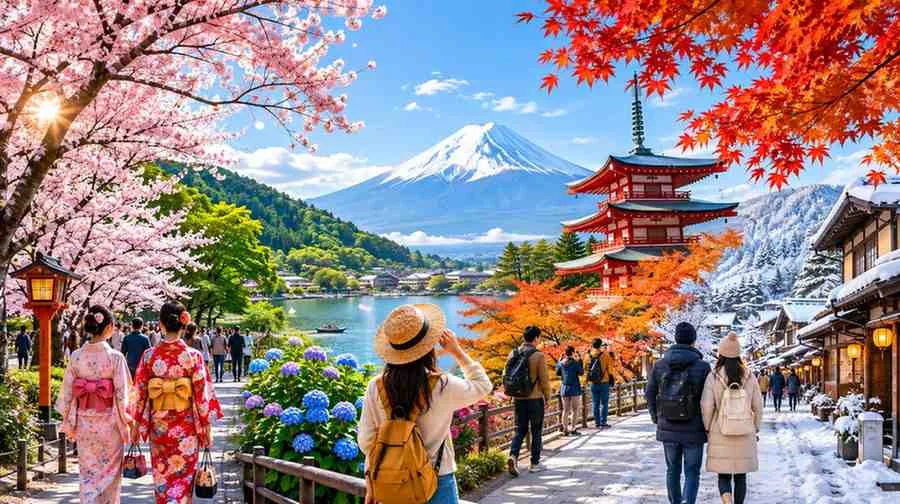
Late March to early April and mid-October to late November are the best times to visit Japan. These windows bring mild weather, cherry blossoms or autumn foliage, and comfortable conditions for walking around cities and temples. If you want lower prices and thinner crowds instead, aim for June or the first half of February.
That’s the short answer. The rest of this guide breaks it down by season, month, and travel goal, so you can pick a window that actually matches your trip instead of guessing.
Who This Guide Is For
This guide is for anyone planning a first or repeat trip to Japan who isn’t sure which month to book. It works whether you’re chasing cherry blossoms, trying to avoid crowds, traveling on a tight budget, or building a trip around a specific activity like skiing or hiking Mount Fuji. If you already know your travel dates and just need to plan your itinerary around them, jump straight to the month-by-month section below.
How This Guide Works
Each section below opens with a direct answer, then gives you the details you need to act on it. Skip to the season or month that matters to you. There’s no need to read the whole thing to get your answer.
Best Time to Visit Japan at a Glance
| Priority | Best Window |
|---|---|
| Cherry blossoms | Late March to early April |
| Autumn foliage | Late October to late November |
| Mild weather, fewer crowds | May (after Golden Week) |
| Lowest prices | June or early-to-mid February |
| Skiing and snow festivals | Late December to February |
| Mount Fuji climbing | Early July to early September |
| Beaches and warm water | July to September |
How to Choose Your Travel Window
Pick your season based on the one thing you care about most: scenery, cost, crowds, or a specific activity. Trying to optimize for all four at once usually means compromising on all of them.
- Want the classic postcard scenery? Book spring or autumn, and accept higher prices and bigger crowds.
- Want to save money? Travel in June or February, outside of holiday weeks.
- Want to avoid crowds more than anything else? Go in January, early February, or June.
- Building your trip around one activity (skiing, hiking, beaches, festivals)? Let that activity set your dates first, then work everything else around it.
Best Time to Visit Japan by Season
Spring (March to May): Best for Cherry Blossoms and Mild Weather
Spring is the single most popular time to visit Japan, and for good reason. Cherry blossoms typically open in Tokyo and Kyoto in the last week of March and peak in the first week of April, though exact dates shift slightly each year and move north as the season progresses. Daytime temperatures sit in a comfortable range, humidity stays low, and the weather is ideal for walking tours, temple visits, and outdoor festivals.
The trade-off is cost and crowds. Hotel rates rise sharply from mid-March through Golden Week (April 29 to May 5, a cluster of four national holidays), and popular sites like Fushimi Inari or Arashiyama get genuinely packed. If you can travel in the second week of April, after peak bloom but before Golden Week, you get good weather with noticeably smaller crowds. Late May is even better for this: warm, dry, green, and quiet, once the holiday rush has cleared.
Summer (June to August): Best for Festivals, Hiking, and Beaches
Summer brings Japan’s biggest matsuri (festivals), warm-water beaches in Okinawa, and the only season you can legally hike Mount Fuji (typically early July through early September). It’s also hot and humid almost everywhere else, with temperatures regularly climbing into the low-to-mid 30s°C (90s°F) in cities like Tokyo and Osaka.
Early June through mid-July is rainy season (tsuyu) across most of the country, though it rarely rains all day. This is actually a smart budget window: fewer tourists, lower prices, and green, quiet temple gardens. Hokkaido mostly skips rainy season and stays comfortable through summer, making it a good alternative if you want to avoid the heat further south. Avoid mid-August if you can, since the Obon holiday sends much of the country traveling domestically at once, pushing up transport and hotel prices.
Autumn (September to November): Best for Fall Foliage and Comfortable Weather
Autumn rivals spring as the best time to visit Japan, and many travelers find it slightly less crowded overall. September can still carry typhoon risk and lingering summer heat, so it’s the weakest month of the season. October is the sweet spot: dry, mild, no rainy season, and the early edge of fall colors in the mountains and Hokkaido. Foliage peaks in Kyoto and Tokyo in mid-to-late November, turning temple gardens and mountainsides red, orange, and gold.
Like spring, the trade-off is crowds at the most famous viewing spots during peak color weeks. Visit major temples right at opening time, or choose slightly less famous foliage spots, to avoid the worst of it.
Winter (December to February): Best for Skiing, Snow Festivals, and Budget Travel
Winter is Japan’s quietest and cheapest season outside of the New Year holiday (December 29 to January 3, when domestic travel spikes and many businesses close). Tokyo and Kyoto stay cold but manageable, typically 2 to 10°C (35 to 50°F), with clear skies and some of the best views of Mount Fuji all year. Hokkaido and the Japanese Alps turn into a serious winter sports destination, with world-class powder snow from December through February and events like the Sapporo Snow Festival in early February.
If budget and low crowds matter more to you than warm weather, this is your window, especially mid-January through early March.
Best Time to Visit Japan Month by Month
- January: Cold and quiet. Best for winter cities, hot springs, and low prices after New Year’s week ends.
- February: Coldest month, but a good value window and peak time for the Sapporo Snow Festival and skiing.
- March: Plum blossoms early, cherry blossoms starting late in the month. Crowds build fast in the final week.
- April: Peak cherry blossom season in the first half, Golden Week crowds in the second half. Book 6 months ahead if you want sakura.
- May: Warm, dry, and green after Golden Week ends. Many travelers consider this the best all-around month.
- June: Rainy season begins. Fewer tourists, lower prices, and lush green scenery if you don’t mind some rain.
- July: Hot, humid, and festival-heavy. Mount Fuji climbing season opens. Gion Matsuri runs all month in Kyoto.
- August: Peak heat and peak summer festival energy, with Obon holiday crowds around mid-month.
- September: Transitional month with typhoon risk. Weather improves steadily as the month goes on.
- October: Dry, mild, and comfortable, with early foliage in the north. Often called Japan’s most balanced month.
- November: Peak fall foliage across most of the country. Crowds rival April at famous temples.
- December: Cold, dry, and clear, with illuminations and Christmas markets in cities, quieter until New Year’s week.
Best Time to Visit Japan for Specific Goals
For Cherry Blossoms: Target the last week of March through the first week of April in Tokyo and Kyoto. Bloom dates shift by a few days each year, so check the Japan Meteorological Agency’s forecast, released each February, before booking flights.
For Fall Foliage: Aim for mid-to-late November in Kyoto and Tokyo, or early-to-mid October in Hokkaido and the mountains.
For the Lowest Prices: Book June or early-to-mid February, avoiding the New Year holiday week.
For the Fewest Crowds: Choose January, early February, or June. Avoid the last week of March through Golden Week, and the second half of November.
For Skiing: Visit Hokkaido or Nagano between late December and February, when snow conditions are most reliable.
For a First-Time Trip with no Strong Preference: Pick May or late October to early November. Both give you good weather and manageable crowds without the extremes of peak season.
Times to Avoid (Unless the Event Is the Point)
- Golden Week (April 29 to May 5): Domestic travel peaks, trains sell out, and hotel prices spike nationwide.
- Obon (mid-August, around August 13 to 15): Similar domestic travel surge, plus peak summer heat.
- New Year’s week (December 29 to January 3): Many restaurants and shops close, and transport gets crowded with people heading home for the holiday.
If your travel dates overlap with any of these, book flights, hotels, and trains at least 3 to 4 months ahead.
Quick Planning Checklist
- Decide what matters most to you: scenery, cost, or crowds. Let that decision drive your dates.
- For cherry blossoms or Golden Week travel, book 6 to 9 months ahead.
- For fall or off-peak winter travel, 2 to 4 months ahead is usually enough.
- Check the Japan Meteorological Agency’s seasonal forecasts (cherry blossom in February, foliage in September) before locking in exact dates.
- Build in flexibility of a few days if bloom or foliage timing is the main reason for your trip, since nature doesn’t follow a fixed calendar.
Frequently Asked Questions
What is the overall best time to visit Japan?
Late March to early April and mid-October to late November are generally considered the best times, offering mild weather and either cherry blossoms or autumn foliage.
What month has the best weather in Japan?
May and October are usually the most comfortable months, with mild temperatures, low humidity, and little rain.
When should I visit Japan to avoid crowds?
January, early February, and June have the smallest crowds, since they fall outside the major holiday and peak-scenery windows.
What is the cheapest time to visit Japan?
June and early-to-mid February typically offer the lowest flight and hotel prices, outside of holiday weeks.
Is it better to visit Japan in spring or autumn?
Both offer similarly excellent weather and scenery. Spring draws slightly larger crowds for cherry blossoms, while autumn foliage in November is often less crowded and lasts longer.
When do cherry blossoms bloom in Japan?
Cherry blossoms typically bloom in Tokyo and Kyoto in the last week of March through the first week of April, though exact dates vary by a few days each year.
When is the best time to see autumn leaves in Japan?
Peak fall foliage hits Kyoto and Tokyo in mid-to-late November, with earlier color in Hokkaido and the mountains starting in October.
Should I avoid Golden Week when planning a trip to Japan?
Yes, unless you specifically want to experience it. Golden Week (April 29 to May 5) brings the year’s heaviest domestic travel, higher prices, and sold-out trains.
Is winter a good time to visit Japan?
Yes, especially for skiing, snow festivals, and budget travel. Winter is cold but dry, with clear skies, low crowds, and the cheapest rates outside of New Year’s week.
How far in advance should I book a trip to Japan?
Book 6 to 9 months ahead for cherry blossom season or Golden Week. For fall or off-peak winter travel, 2 to 4 months is usually enough.