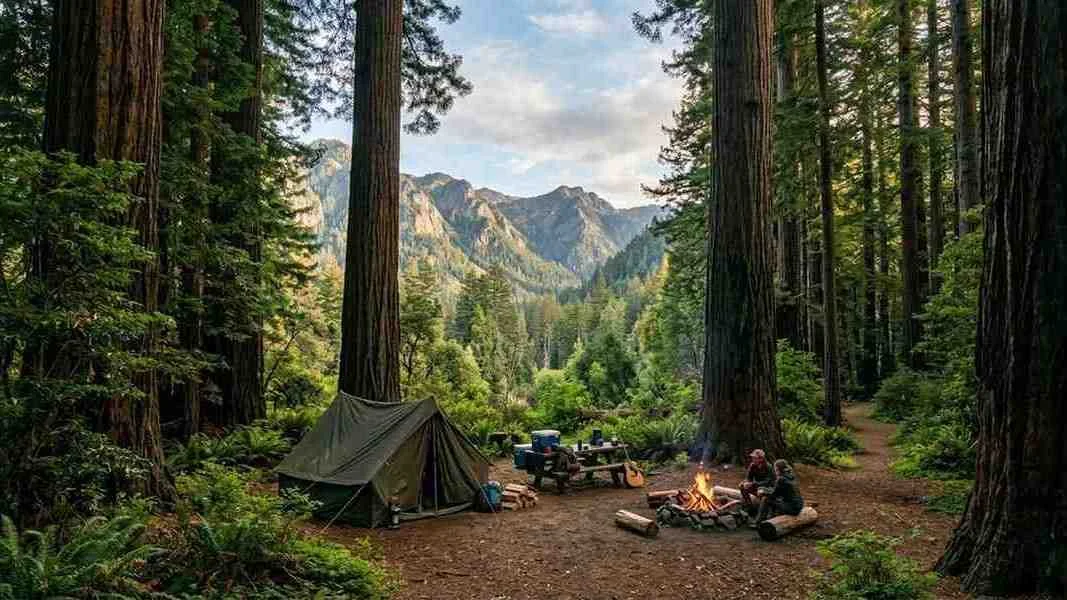
The best places to camp in California depend on the experience you want. Choose Redwood National and State Parks for towering forests, Yosemite for famous mountain views, Joshua Tree for desert landscapes, or Morro Bay for a coastal escape. California has a campground for nearly every style, but each region has different weather, access, reservation rules, and comfort levels.
Use this guide to match a destination to your scenery, comfort, and planning needs.
Quick Guide To The Best California Camping Destinations
| Best for | Recommended destination | Camping experience |
|---|---|---|
| Redwoods and quiet forest walks | Redwood National and State Parks | Developed and backcountry camping |
| Iconic mountain scenery | Yosemite National Park | Busy, reservation-based campground camping |
| Desert views and stargazing | Joshua Tree National Park | Reservable and first-come campgrounds |
| Ocean views and beach access | Morro Bay State Park | Developed coastal campground |
| Dramatic coastline | Big Sur area | Forest and coastal campgrounds near Highway 1 |
| Giant trees and mountain air | Sequoia and Kings Canyon | Forest, river, and high-country camping |
| Volcanoes and cooler summer weather | Lassen Volcanic National Park | Developed campgrounds and backcountry options |
| Warm desert solitude | Anza-Borrego Desert State Park | Developed, primitive, and dispersed camping |
1. Redwood National And State Parks Are Best For Redwood Forest Camping
Redwood National and State Parks are the best choice for campers who want cool, shaded forests and a quieter setting. The parks combine old-growth redwoods, rivers, coastal scenery, and hiking trails. Four developed campgrounds serve tent and RV campers, while seven designated backcountry campsites require a free permit. Redwood Creek is the only area where dispersed camping is allowed.
Who should camp here: Families, hikers, photographers, and anyone who prefers forest camping over hot, exposed terrain.
How it works: Reserve a developed campground in advance, especially for summer travel. Choose backcountry camping only if you can carry supplies and obtain the required permit.
2. Yosemite National Park Is Best For Iconic Mountain Scenery
Yosemite is the strongest choice for granite cliffs, waterfalls, giant sequoias, and famous trails. It is also difficult to book during peak season.
Yosemite has 13 popular campgrounds. Reservation windows vary, and popular sites can disappear within minutes. A few campgrounds operate first-come, first-served during parts of the year.
Who should camp here: Campers who value famous scenery, trail access, and a full national park experience.
How it works: Check the official campground schedule before choosing dates. Create a Recreation.gov account and learn the release time for your campground. Do not assume a walk-up site will be available on a summer weekend.
3. Joshua Tree National Park Is Best For Desert Camping And Stargazing
Joshua Tree is ideal for campers who want wide-open landscapes, unusual rock formations, clear night skies, and a dry climate. Prepare for sharp temperature changes between day and night.
Most campsites are reservable through Recreation.gov, from the same day up to six months in advance. The park also has first-come, first-served campgrounds, but these fill quickly on weekends and during the busy fall-to-spring season. Cell service is very limited, so book and download what you need before entering the park.
Who should camp here: Couples, photographers, climbers, stargazers, and campers comfortable bringing extra water and handling temperature swings.
How it works: Reserve a site before arrival whenever possible. Check heat conditions, fire restrictions, water availability, and seasonal campground closures. Never sleep in a vehicle along a roadside or pullout, because overnight roadside camping is not allowed in the park.
4. Morro Bay State Park Is Best For Accessible Coastal Camping
Morro Bay State Park suits campers who want coastal scenery near services. The area offers Morro Rock views, bay access, walking, kayaking, and birdwatching. Its developed campground is a manageable choice for a first trip.
Who should camp here: Families, first-time campers, RV travelers, and anyone who wants a beach trip with convenient amenities.
How it works: Check availability through ReserveCalifornia and reserve early for weekends and holidays. Pack layers because coastal mornings and evenings can feel cool even when inland areas are warm. Follow posted rules about fires, wildlife, and shoreline access.
5. The Big Sur Area Is Best For A Dramatic Coastal Road Trip
The Big Sur area combines redwood groves, rugged cliffs, and Pacific Ocean views. Campgrounds are located in and around state parks, forests, and private properties. Check highway conditions, closures, weather, and reservations before leaving.
Who should camp here: Road trippers, couples, hikers, and campers who want scenery to be the main part of the trip.
How it works: Confirm road conditions and campground status before departure. Reserve a legal campsite rather than relying on roadside parking or informal pullouts. Bring food and fuel planning into the itinerary because services are more limited than in larger coastal towns.
6. Sequoia And Kings Canyon Are Best For Giant Trees And Mountain Camping
Sequoia and Kings Canyon suit campers who want giant sequoias, deep canyons, rivers, and mountain trails with developed camping options. Higher-elevation access can change with snow and weather.
Who should camp here: Families with older children, hikers, and campers who want forest and mountain scenery without choosing a desert environment.
How it works: Check campground opening dates, road conditions, and trail alerts before booking. Plan for cooler nights at elevation and keep food stored according to park rules.
7. Lassen Volcanic National Park Is Best For Cooler Mountain Camping
Lassen Volcanic National Park offers volcanic landscapes, alpine lakes, pine forests, and cooler summer conditions. Snow can affect roads, trails, and campground access, so confirm facilities are open before a late-season trip.
Who should camp here: Hikers, families, geology fans, and campers who prefer cooler mountain conditions.
How it works: Review current alerts and seasonal opening information before driving into the park. Bring warm layers, even for summer nights, and choose trails that match your group’s elevation experience.
8. Anza-Borrego Desert State Park Is Best For Primitive Desert Camping
Anza-Borrego Desert State Park is the best option for campers seeking space, dark skies, and a more independent desert experience. It offers developed campgrounds as well as primitive and dispersed camping areas, but remote sites require more preparation than a standard campground.
Because the desert is remote, plan carefully for water, shade, navigation, vehicle readiness, and weather.
Who should camp here: Experienced tent campers, photographers, stargazers, and travelers who want solitude rather than full amenities.
How it works: Confirm where camping is permitted, carry enough water, check weather and road conditions, and tell someone your route. If you are new to camping, start with a developed site before trying a remote location.
How To Choose The Best Place To Camp In California
Match the landscape to your experience. Redwoods and mountains suit shade and hiking lovers. Coastal campgrounds work well for families and beginners. Deserts offer more space but demand stronger preparation.
California State Parks says many campgrounds fill six months ahead, although some parks have first-come, first-served sites. National parks may use Recreation.gov instead. Check the official park page for reservations, closures, fire restrictions, water details, and seasonal access before you travel.
Choose a developed campground if you need toilets, tables, water, or easy vehicle access. Choose backcountry or dispersed camping only when you understand permits, navigation, food storage, and water planning.
Frequently Asked Questions About Camping In California
What are the best places to camp in California for first-time campers?
Morro Bay, a developed Redwood campground, or a developed Sequoia and Kings Canyon site are good starting points because they offer nature without remote-camping demands.
Where can I camp in California near the beach?
Morro Bay State Park and campgrounds in the Big Sur area are popular coastal choices. Check the official park or campground page for current reservations, access restrictions, weather, and fire rules before leaving.
What is the best time of year to go camping in California?
The best season depends on the region. Coastal and desert trips are often more comfortable outside peak heat, while mountain access may wait for snow to clear. Check current conditions before booking.
How far in advance should I reserve a California campsite?
Reserve as early as possible for popular summer weekends and holidays. California State Parks notes that many campgrounds fill six months ahead. Yosemite and Joshua Tree use their own reservation schedules, so check the official destination page before your booking date.
Can I camp anywhere in California’s forests or deserts?
No. Camping is allowed only in designated areas or where the managing agency permits dispersed camping. Rules differ between national parks, state parks, national forests, and Bureau of Land Management lands. Verify the local rules before setting up camp.
What should I check before a California camping trip?
Check availability, road conditions, weather, fire restrictions, water access, wildlife rules, and park alerts. Download maps before visiting areas with limited cell service.